Kingman, AZ · Garage Door Service
What We Actually Check When We Come Out
A straight look at what a Kingman Garage Door Pros service call checks on 1990s-era Kingman houses, from spring tension to heat-worn seals and track alignment.
- Repairs & new doors
- Springs & openers
- Serving 5 nearby communities
When to Call Someone
Most of the houses we work on in and around Kingman went up between 1989 and 1999 - that's the median for this market, and it means a lot of original hardware is now past 25 years old. If your door is slow to open, drops the last few inches with a bang, or the opener runs but the door doesn't move, don't wait on it. A spring that's about to let go gives warning signs first: the door feels heavier than it used to, or it won't stay up when you lift it by hand with the opener disconnected. That's the point to call, not after the spring snaps and the door is stuck down. We also get calls where the door works fine but sounds rough - grinding on the rollers, a track that's pulled slightly off the wall. Those are cheaper fixes now than they are once the roller chews up the track or the opener strains hard enough to burn out a gear.
With household incomes in this area running around $43,272 median, we hear from a lot of owners who want to know if something is worth fixing before we touch it. That's a fair question and we'll give you a straight answer on-site, not a pitch.
The Problem
The service area runs about 9,865 households with roughly 2,941 owner-occupied houses, and most of that stock shares the same build era - late 1980s through the 1990s - across the two main parts of town. That consistency cuts both ways. It means parts are often still around for a straightforward repair, but it also means a lot of doors are hitting the same failure points at close to the same time, because they were installed on the same cycle. Torsion springs rated for a certain number of cycles don't care what year it is - they care how many times the door has gone up and down, and a 1994-built house with a 30-year-old door is due.
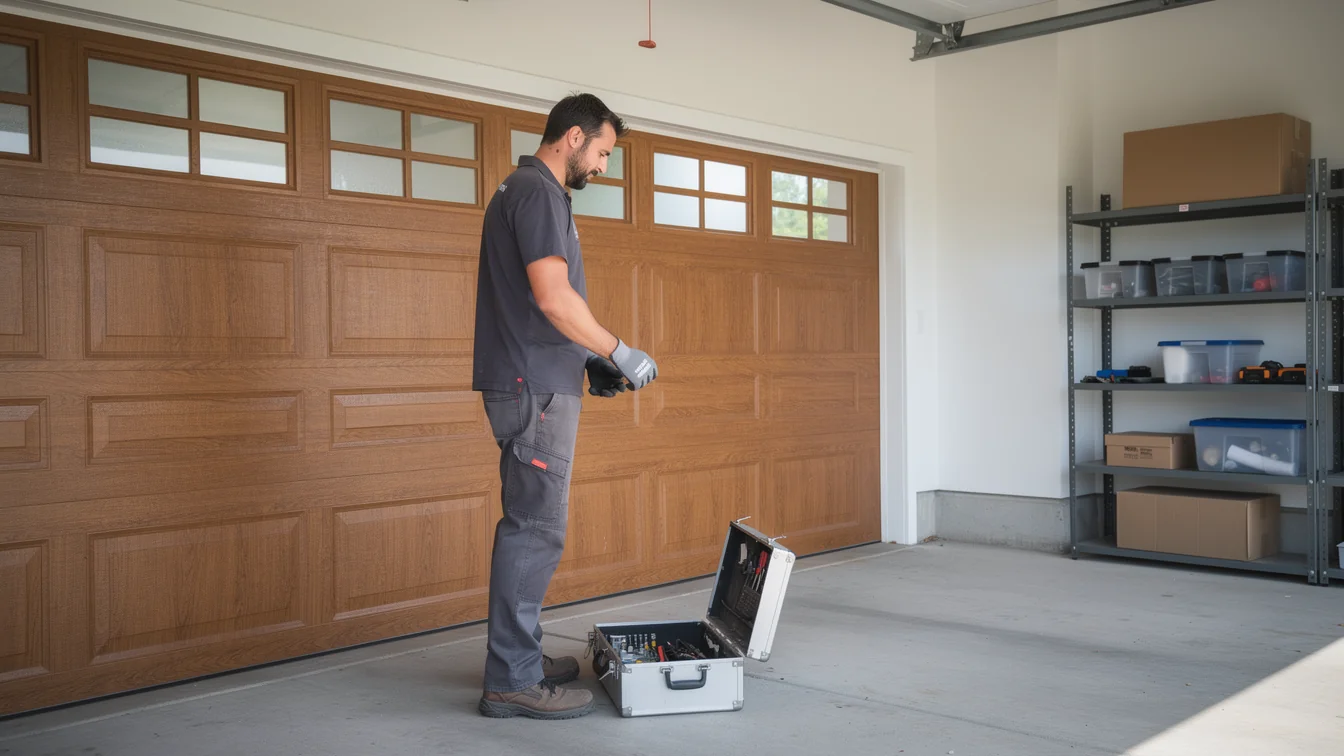
What we check on a basic call: spring tension and wear, cable fraying at the drum, track alignment and the bolts holding the brackets to framing that's often original to the house, roller condition, and the opener's force settings. On older openers from this build era, the safety reversal sensors are sometimes an add-on retrofit rather than factory-installed, and we check those specifically because they're not optional.
What the Weather Here Does to It
Kingman sits in a severe heat band, and that heat is hard on garage doors in ways that aren't obvious from inside the house. Steel panels expand during the day and contract overnight, and over enough cycles that movement works screws loose at the hinge points and stresses weld seams on older doors. Weatherstripping along the bottom and sides dries out and cracks faster here than it would in a milder climate - rubber that would last a decade elsewhere is often brittle and letting in dust and heat within a few years.
Lubricant matters more here too. Heavy grease that's fine in a cooler climate turns gummy in a hot garage and attracts grit, which speeds up roller and hinge wear. We use lighter lubricant suited to the heat for that reason. The springs themselves also pay a tax: heat-cycled steel fatigues faster than steel that stays at a stable temperature, which is part of why torsion springs in this area don't always make it to their rated cycle count. If your garage faces west and bakes all afternoon, that door is working harder than one on the shaded side of the same house.
What Changes With the Season
The swing in Kingman between a summer garage interior and a winter morning is real, and metal hardware reacts to it. In the hottest stretch, steel tracks and panels run warm enough that bolts torque differently than they do in cooler months - a track that's slightly misaligned in July can bind harder than the same misalignment would in January. We get more spring failures and opener strain calls in the hot months because the extra thermal stress is the last straw on hardware that's already near the end of its service life.
We'll be honest about one limit here: we don't do cosmetic refinishing or repaint faded panels. If your door's hardware is sound but the paint has baked and chalked from years of heat exposure, that's a job for a painter, not us. What we do is make sure the moving parts - springs, cables, rollers, opener - are rated for another season of this climate before we leave. For houses out toward New Kingman-Butler or Golden Valley, the same build era and the same heat apply, so the checklist doesn't change much with distance from the center of town.
Frequently asked questions
How often should a garage door spring be replaced in Kingman?
It depends on cycle count and age rather than a fixed calendar, but given the heat-cycle fatigue common here, springs on houses built in the 1989-1999 window are often due or overdue. If yours hasn't been replaced since the house was built, have it checked - we can estimate remaining life during a service call.
Why does my door bind more in summer than winter?
Steel expands as it heats up, and in Kingman's severe heat that expansion is enough to tighten up a track that was already slightly out of alignment. The bind shows up worse in the hottest months and can ease back in winter, but the underlying misalignment needs fixing either way.
Do you work on doors in Golden Valley or Yucca?
Yes - Golden Valley is about 13 miles out and Yucca about 23 miles, both within our service area. The housing stock and climate conditions are close enough to Kingman proper that the same checks apply.
Is weatherstripping replacement worth it?
Usually, yes. In this climate the rubber seal at the bottom and sides cracks and shrinks faster than it would somewhere milder, and a failed seal lets in dust and heat. It's one of the cheaper parts of a service call and makes a real difference to what gets into the garage.
Related garage door services in Kingman
More garage door guides
Book garage door service in Kingman
Call now or request a quote - tell us what the door is doing and where you are.