
Kingman, AZ · Garage Door Service
Garage Door Repair for Golden Valley's 1999-Era Homes
Golden Valley homes mostly date to 1999, so most garage doors still run original springs and openers. We drive out from Kingman, 13 miles, to fix them.
- Repairs & new doors
- Springs & openers
- Serving 5 nearby communities
How We Fix It
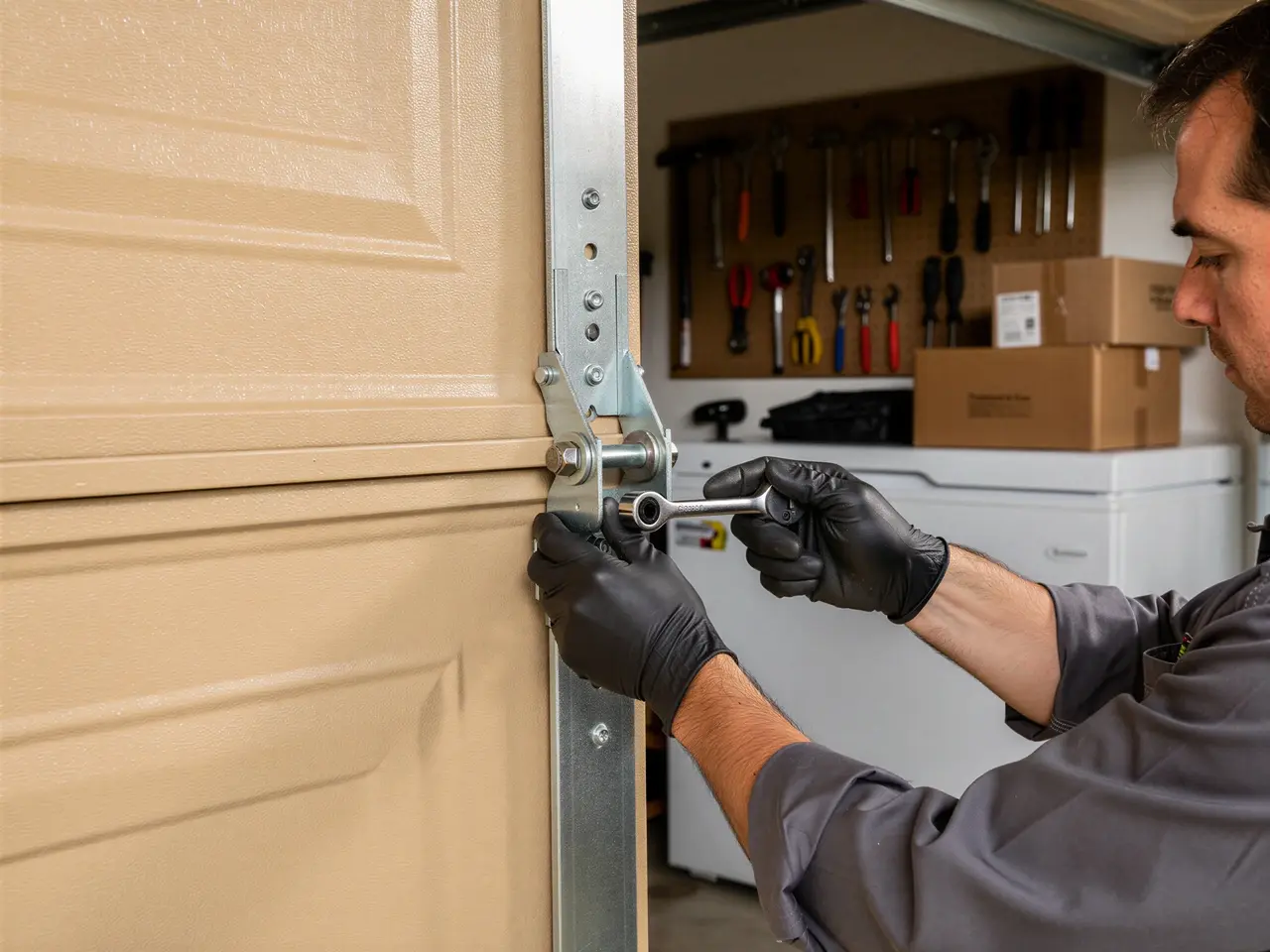
Most houses in Golden Valley went up around 1999, and a lot of them still have the garage door hardware they shipped with. That means when we get a call out here, we're usually looking at a torsion spring that's close to 25 years old, or an opener from the same era that was never swapped out when it started grinding. We diagnose on site: check the spring wind, look at the drum and cable wear, run the opener through its cycle to see where it binds or stalls. If the track is bent or the rollers are the original steel ones that came with the house, that shows up fast once we're watching the door move. We don't guess at a part number before we see the door - we pull the housing, check the stamp, and go from there. Golden Valley sits far enough out that we load the truck before we leave Kingman, so we carry a broad range of springs and openers rather than betting on one brand being common here. The goal on the first visit is a working door, not a list of things to come back for.
Time on the Job
We're coming from Kingman, about 13 miles out, so a Golden Valley call isn't a five-minute drive-up the way it might be for someone already in town. That distance doesn't change how long the repair itself takes once we're there - a spring swap or opener replacement runs about the same regardless of address - but it does mean we plan the truck load before we leave, since running back for a part means another 13 miles each way. For a household stock that's mostly pushing 25 years old, we try to carry what a door of that age is likely to need rather than a narrow kit. If something turns out to be unusual - an odd-size panel or a discontinued opener board - that's the one case where a second trip is the honest answer instead of a rushed fix.
Parts We Carry
Given that most garage doors out here trace back to construction around 1999, the parts that fail most often are the parts that were installed then and never touched again: torsion springs that have done two decades of cycles, nylon rollers gone brittle, and chain-drive openers with worn gears or a dying capacitor. We stock standard torsion springs sized for the single and double doors common to that build era, plus steel and nylon rollers, cables, and drums. On openers, we carry common chain and belt-drive units that cover what a late-90s house is likely running, whether that's the original unit limping along or a first replacement someone already put in. What we don't stock on the truck is anything custom-sized or a panel pattern that's been discontinued - those get ordered once we've confirmed the exact measurement at the door, which can add a few days before a full panel swap is done.
Doing It Yourself
A door that's stiff, noisy, or slow to close on a house from this era is often just dry hardware - rollers and hinges that haven't seen lubricant since they were installed. A light spray of garage-door lubricant on the rollers, hinges, and the spring itself can quiet a lot of that down, and it's safe to do yourself. What isn't safe to do yourself is anything involving the torsion spring under tension - loosening the set screws on a 25-year-old spring that's never been serviced is how people end up in the ER, not how they save a service call. If the door drops fast when you pull the release cord, or the opener strains and reverses before it reaches the floor, stop there and call it in. Severe summer heat out here also shortens the life of nylon rollers and plastic opener gears faster than it does in milder climates, so what looks like a minor squeak in spring can be a part close to failing by July.
How It Shows Up
On a house built around 1999, the failure pattern tends to follow the hardware's age rather than anything dramatic. A spring that's wound the same direction for 25 years of Arizona heat gets brittle and snaps, usually on an ordinary open rather than during a storm. Openers from that same window start showing their age with a motor that runs hot and shuts itself off mid-cycle, especially once summer temperatures climb into severe heat territory and the garage itself holds that heat all afternoon. Cables fray at the drum from two decades of the same friction point. None of this is unique to one house - it's the whole stretch of homes built in that same window showing the same wear at roughly the same time, which is why a call from this area so often turns out to be exactly what the last one was.
Frequently asked questions
Why does the repair cost the same if you're driving 13 miles from Kingman?
The drive doesn't change what the repair itself takes - a spring or opener swap runs about the same labor either way. We plan the truck's parts load before leaving Kingman so we're not making a second 13-mile trip for something we should have brought the first time.
Is my garage door's hardware really still original?
If your house was built around 1999 and nobody's mentioned replacing the spring or opener, there's a good chance it is. That's roughly 25 years of cycles on a torsion spring, which is well past when most springs start to fatigue and snap.
Can I just lubricate a noisy door myself?
Yes, for rollers and hinges - a light spray of garage-door lubricant is safe and often helps. Don't touch the torsion spring's set screws yourself; a spring that old under tension is not a DIY job.
Does the heat out here actually affect garage door parts?
Severe summer heat is harder on nylon rollers and plastic opener gears than milder climates are, and a garage traps that heat all afternoon. A part that's borderline in spring often fails by the height of summer.
More garage door services in Golden Valley
Book garage door service in Kingman
Call now or request a quote - tell us what the door is doing and where you are.